

Client revenue is built from the ground up.
Most organizations invest in what clients can see.
The EGA Model™ looks at what holds it all together: the culture, the trust and the operating structure underneath your retention and expansion numbers. It shows where the system is breaking and what to fix first.
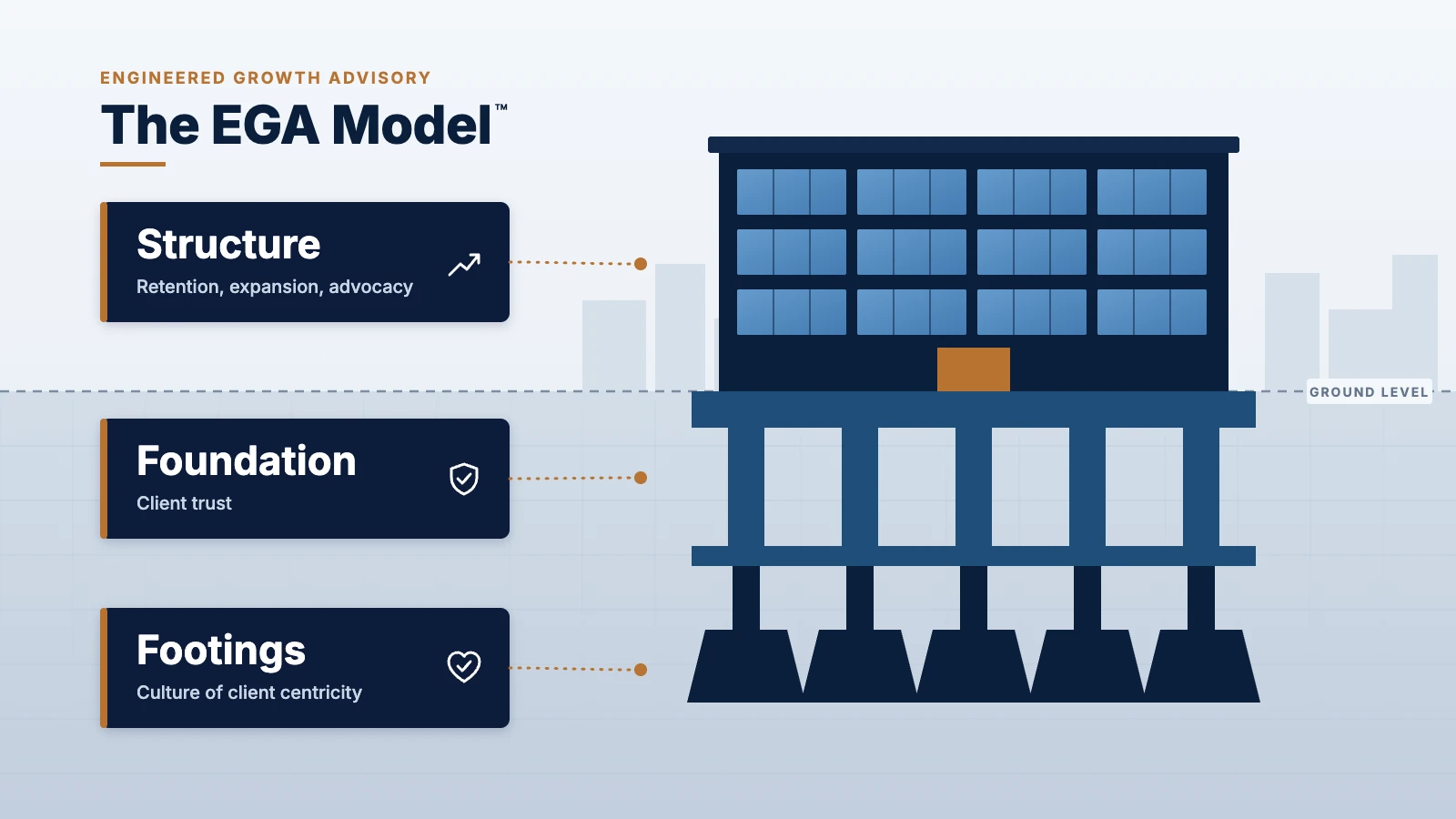
The three layers
Built in order. Assessed in order.
Each layer can only carry what the layer beneath it supports. Most organizations start at the top, with expansion targets, new playbooks and better tooling. Without the layers underneath, that adds weight the organization cannot carry. Renewals need justification, expansion needs pressure, and growth feels negotiated.
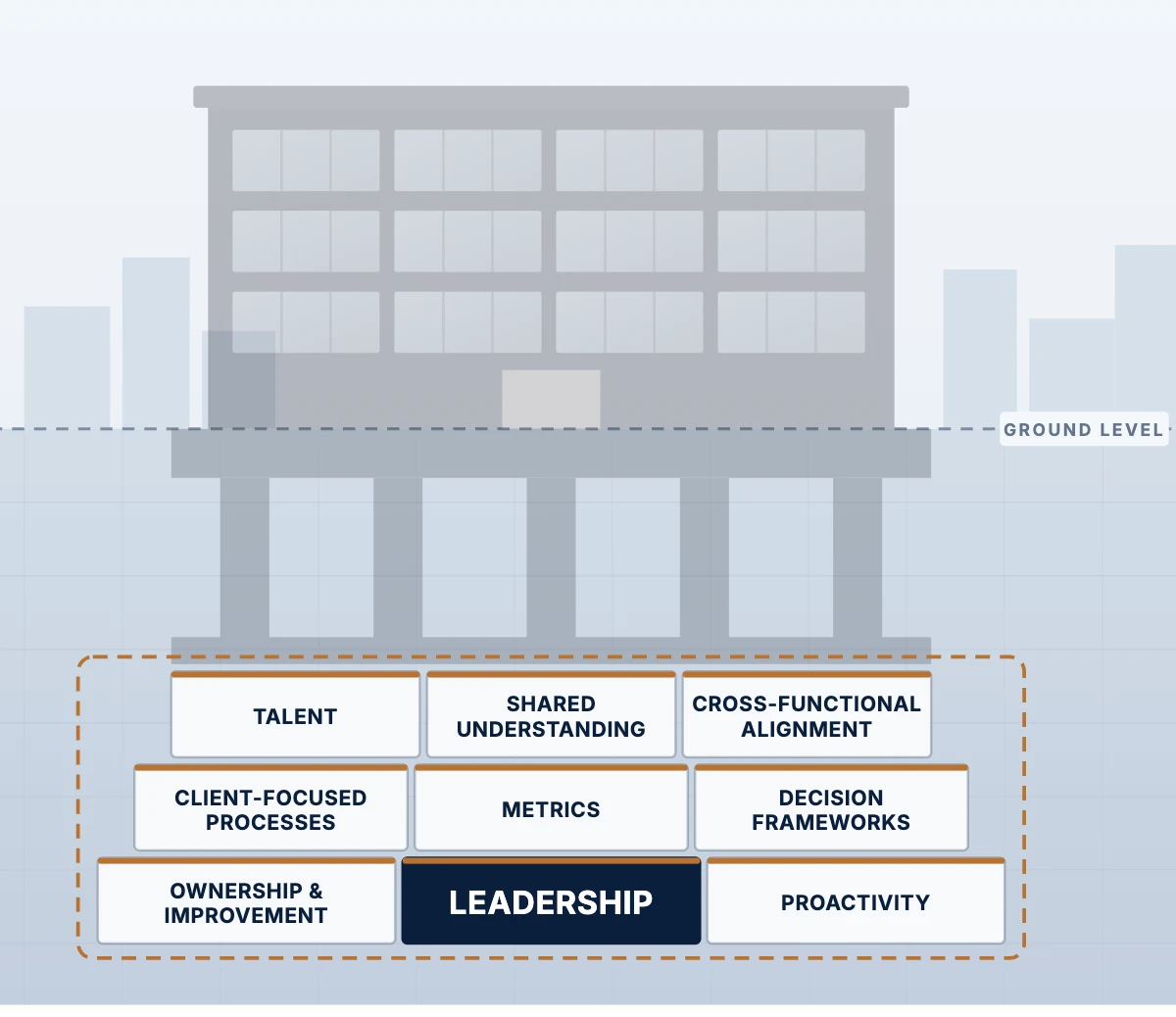
01 Footings
Culture of Client Centricity
The base everything else rests on. Not stated values, but the operating reality that shapes how decisions get made when priorities compete.
Client centricity does not come from good intent. It comes from what is reinforced every day.
What it’s made of
- Leadership that sets the standard
- Shared understanding of the client
- Cross-functional alignment
- Processes built around the client
- Talent that reinforces the culture
- Metrics that surface leading indicators
- Decision frameworks for trade-offs
- Ownership and continuous improvement
Warning signs
- Client centricity lives in presentations rather than decisions
- Internal priorities override client outcomes
- Leadership isn’t aligned on what client success means
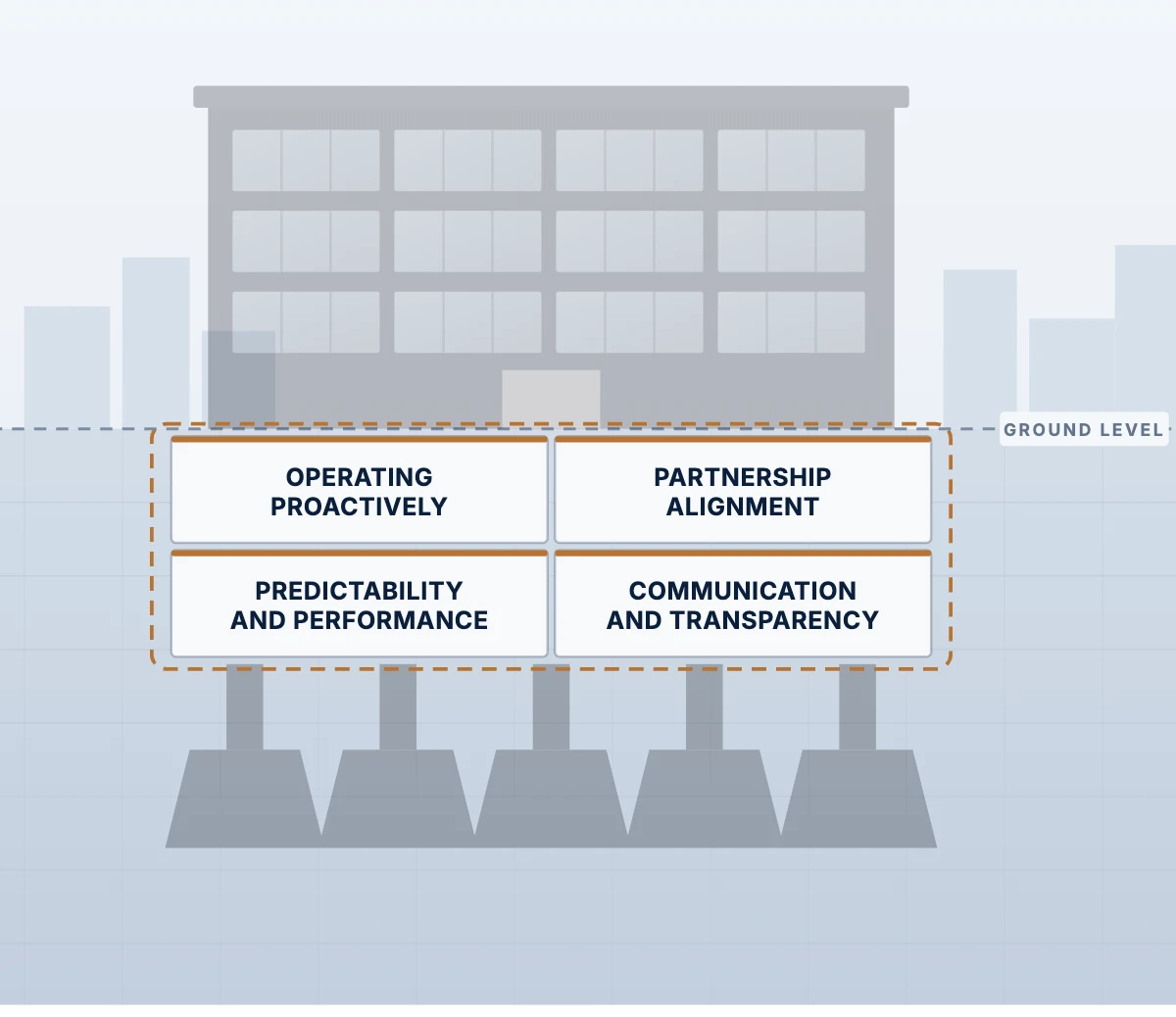
02 Foundation
Client Trust
Trust is commercial infrastructure. It determines renewal predictability, expansion credibility and how much friction a relationship can absorb when something goes wrong.
Without this foundation, growth feels negotiated. With it, growth feels earned.
What it’s made of
- Predictability and performance
- Communication and transparency
- Partnership alignment
- Operating proactively
Warning signs
- Renewals become reactive
- Clients aren’t getting consistent value
- Communication breaks down
- Teams operate from different versions of reality
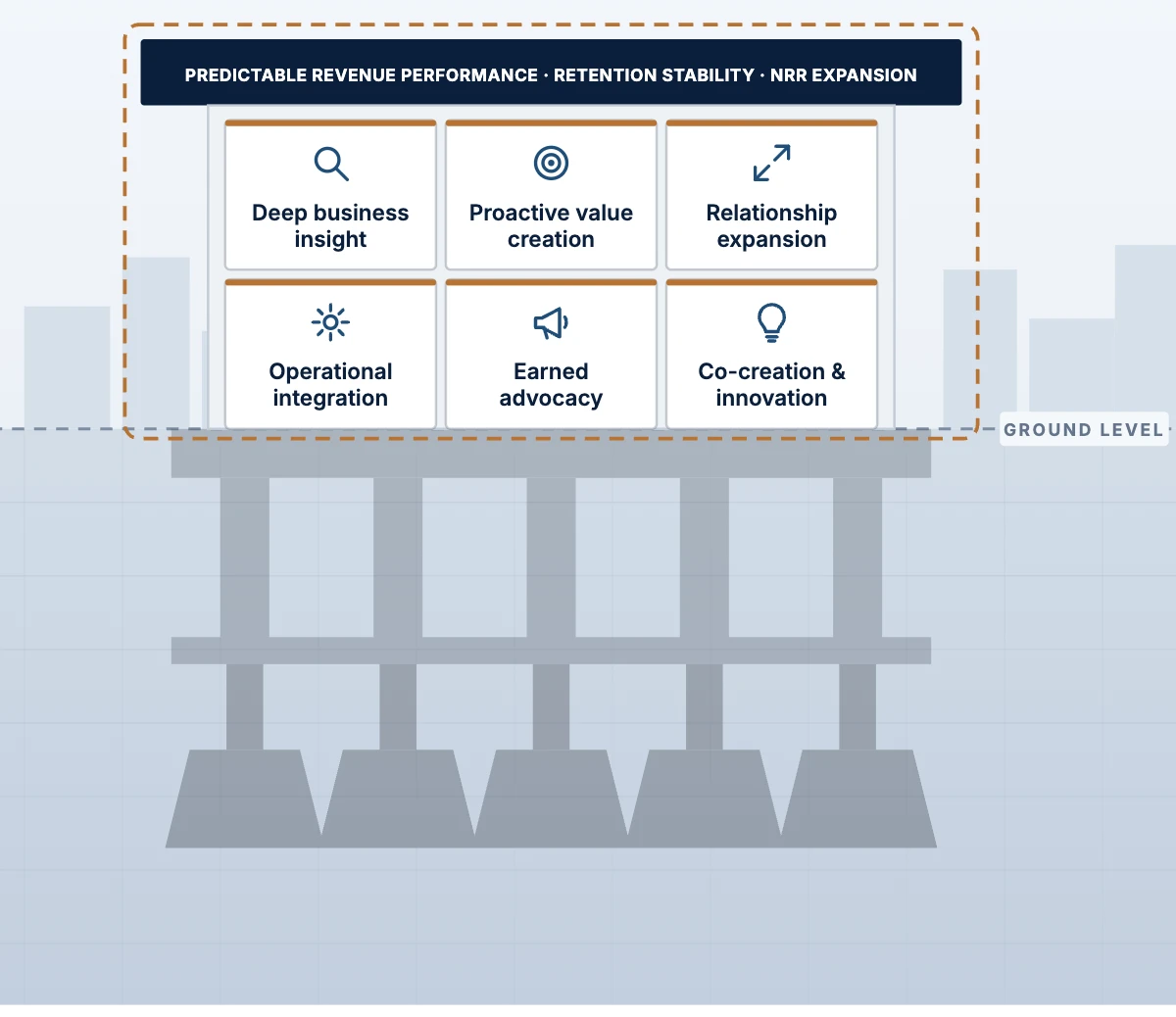
03 Structure
Retention → Expansion → Advocacy
Where client value becomes revenue. With strong footings and a durable foundation, you stop managing accounts and start building partnerships.
This is where the work moves from protecting revenue to shaping it.
What it’s made of
- Deeper insight into the client's business
- Proactive value creation
- Systematic, forecastable expansion
- Operational integration
- Earned advocacy
- Co-creation and innovation
Warning signs
- Revenue is unpredictable
- Expansion depends on individual relationships
- Advocacy is inconsistent
- Churn risk goes unnoticed until it’s too late
Putting the model to work
The Client Revenue Diagnostic applies the model to your business.
In two to four weeks, fixed scope and fixed fee, I assess each layer and give you a clear answer and a plan your team can act on.
01
Diagnose
Assess each layer using your retention and expansion data and interviews with leaders across functions.
02
Prioritize
Identify the weakest layer and the three to five changes that will matter most.
03
Build
Put the operating discipline in place, from the ground up, until your team owns it.
Go deeper
The Engineering Client Success series
Part 1
Engineering Client Success
Why does client revenue get less rigour than new sales?
Read article →
Part 2
Footings: Where Client Centricity is Built
What has to be true inside the business before clients will trust you?
Read article →
Part 3
The Foundation of Trust
What earns a client’s trust, and what keeps it?
Read article →
Part 4
Structure: What Becomes Possible
When clients trust you, what should that be worth in revenue?
Read article →